
Stress Eating vs Mindful Eating
Jun 22, 2026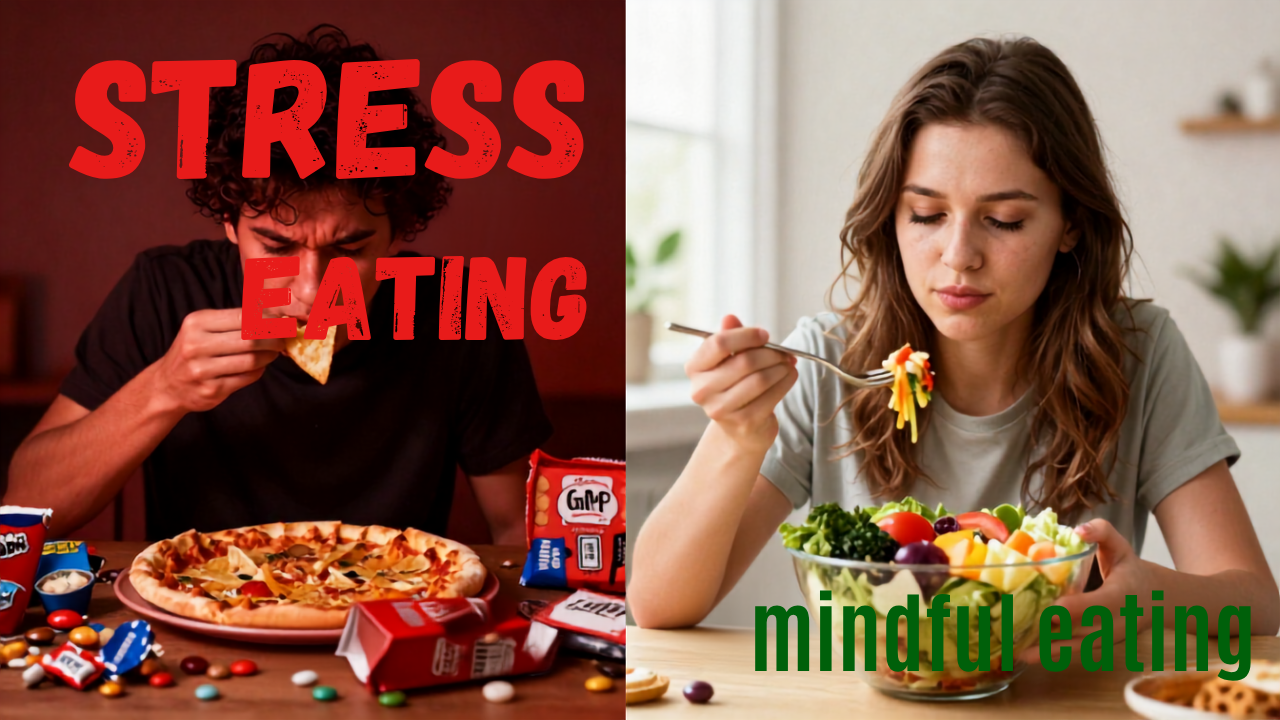
Stress Eating vs Mindful Eating Blog
Have you ever found yourself eating and realizing you don’t even know why you’re eating?
Same- we’ve all been there. But why? What causes this and why do we mindlessly eat?
Emotions. We as humans satisfy emotional needs through many different avenues, but one very prevalent avenue that should be discussed is emotional eating. This is when an individual’s emotions are fueling an urge to eat instead of real hunger cues fueling an urge to eat. It’s important to understand stress/emotional eating, common triggers, and how to cope with emotions without relying on food, so that we maintain a healthy relationship with food and utilize it for the purpose it’s meant to serve - nourishment. The structure of your nutrition throughout each day can also play a role in both the severity and frequency of these stress-eating experiences.
Emotional Eating vs Compulsive Eating
Emotional: Using food to make yourself feel better – eating to satisfy emotional needs rather than to satisfy hunger
Effects of not taking care of our body & mind
- Temptations and cravings for certain food items
- Low blood sugar
- Masking emotions
- Impulsive behaviors
- Increase in worry / unknown
Compulsive: Inability to ignore the impulse to eat and the ability to stop eating -- attempt to cope with emotional or psychological issues
Causes of Emotional Eating
To regain control of your eating habits, it is important to understand why people emotionally eat in the first place. Maybe you are in a particularly stressful situation, maybe you are just bored, or maybe you associate social situations with fun times involving excessive eating and drinking with friends. Whatever your reason, using food as a coping mechanism is not going to be the best option, for many reasons. The National Institutes of Health offers these guidelines for recognizing behaviors that can lead to emotional eating:
- If you have trouble managing your emotions, you are more likely to use food as a coping mechanism.
- Being unhappy with your body makes you more prone to emotional eating. This goes for both men and women.
- Dieting can put you at risk. If you feel deprived of food, you may be frustrated and tempted to emotionally eat.
The Centers for Disease Control and Prevention offer the following cues for recognizing when you might reach for food when you are not hungry.
Common triggers for eating when not hungry are:
- Opening up the cabinet and seeing your favorite snack food.
- Sitting at home watching television.
- Before or after a stressful meeting or situation at work.
- Coming home after work and having no idea what's for dinner.
- Having someone offer you a dish they made "just for you!"
- Walking past a candy dish on the counter.
- Sitting in the break room beside the vending machine.
- Seeing a plate of doughnuts at the morning staff meeting.
- Swinging through your favorite drive-through every morning.
- Feeling bored or tired and thinking food might offer a pick-me-up.
Researchers are just beginning to tease out the complexities of our eating behaviors. And the more influences they turn up, the more confusing our food habits seem. Coming up with a plan to combat each outside cue could make you crazy, but developing a habit of eating consciously can help put you in control. Ultimately, conscious eating involves being aware and, above all, truly enjoying your food.
Tips for Mindful Eating
Instead of mindless eating, try practicing mindful eating. This means paying attention to your body’s hunger cues and understanding if you really are hungry, or just eating out of boredom or stress. Before eating a meal or snack, the American Heart Association suggests:
- Ponder: Ask yourself if you are really hungry before you eat.
- Appraise: Notice your food and how it smells and looks.
- Slow: Eat your food slowly.
- Savor: As you eat, take time to really taste each bite.
- Stop: Stop eating when you are full.
To help prove the effects of mindful eating, researchers showed one group of women a disturbing video of industrial accidents, and another group of women a pleasant travel video. When offered sweet, salty, and bland snacks, the women who watched the stressful video ate nearly twice as many sweets as the other group. Interestingly, stressed men had the opposite response, eating fewer snacks than the more relaxed men.
Taking Control of Emotional Eating
Slowing down and paying more attention to what you eat makes you appreciate food more and eat healthier.
To get the upper hand on emotional eating:
- Learn your body's hunger cues. Everyone's body responds differently to hunger. Maybe your stomach growls or you have trouble concentrating. Maybe your stomach just feels empty. Know how to read your signals. When you reach for seconds or that bag of chips, stop and listen to your body. Are you really hungry? If so, go for a healthy alternative, such as fruit, or low- or non-fat yogurt.
- Pay special attention to your eating patterns. Do certain people or events compel you to eat even when you are not hungry?
- Do you eat when you feel angry, depressed, hurt, or otherwise upset?
- Do you eat in response to certain people or situations?
- Do certain places or times of day trigger food cravings?
- Develop coping skills. The next time you reach for food when bored, stressed, or depressed, try to turn to other mechanisms to help you cope with your emotions. These might include:
- Exercise—take a walk, ride a bike, or go to a workout class with a friend. Exercise is a proven way to help relieve stress.
- Take a class or read a book about stress management.
- Talk about your feelings with a close friend or therapist.
- Focus your attention on something else like a hobby, puzzle, or good book.
- Set a calm mealtime atmosphere. Avoid controversial topics during meals. Talking about how you cannot afford a new roof or the layoffs at the office can wait until after dinner. Come to the table relaxed. Take 5 minutes to close your eyes and take some deep breaths. Turn the music off or play some mellow tunes and light some candles. Save the lively stuff for later.
- Avoid watching TV, using the computer, or looking at your smart phone. Much like eating with friends, people tend to eat more when watching electronic devices, which often results in losing track of how much you actually are eating.
- Give your body time to register the meal. Eat slowly and wait at least 15 minutes before reaching for seconds. It takes that long for your stomach to signal your brain that it is full. When you eat mindlessly, your brain does not have time to keep track of how much food you have eaten. Be aware of what you eat, as well as your portion size.
- Savor your food. Be sure to appreciate the texture, flavor, and aroma of your food. This holds true whether you are in a stressful conversation, or partying with friends. It is easy to overeat or consume unhealthy food in either of these atmospheres.
- Keep healthy food close at hand. If you do find yourself reaching for a snack, make sure that you have plenty of healthy alternatives like fruits, vegetables, or low-fat dairy on hand. Supporting local food markets is a great way to counteract fast food and fast life. Know where your food comes from, how it tastes, and how your food choices affect the rest of the world. Being more in tune with your food will influence what and how much you eat.
Know When to Seek Help
Talk to your health care provider if you believe your emotional eating is interfering with other areas of your life, especially if you show any symptoms of a binge eating disorder:
- You often lose control of your eating.
- You often eat to the point of discomfort.
- You have intense feelings of shame about your body or your eating.
- You make yourself vomit after eating.
Activities to Cope with Emotions rather than Mindlessly Snacking
- Go for a walk
- Meditate
- Slow, controlled, deep breaths
- Face mask
- Hot bath
- Call a friend
- Text a friend
- Journal
- Fold laundry
- Youtube videos
- Read a book
- Hug a loved one
- Go to mall
- Food shop
- Paint nails
- Massage
- Cook/Bake
- Listen to a podcast
- Listen to music
- Drink tea
- Go to bed early
- Doodle
- Yoga/Stretching
- Organize fridge
- Coloring book
- Organize room
- Play with your pet
- List 3 things you are grateful for
- Make a to do list for the next day
Nutritional Structure and Consistency
A strategy that may provide a little bit of leverage in this matter would be regularly practicing optimal nutritional structure.
What does this mean?
Eat 3-6 meals per day depending on your needs with each meal containing a good balance of all 3 macronutrients, while ensuring total daily protein is adequate. The more you do this, the more you can regulate your hunger hormones and be in better control. Protein is also very satiating which can help reduce the urge to snack mindlessly so often. You can certainly reduce how often you mindlessly snack by maintaining nutritional structure and aiming for an adequate daily protein intake. Two other factors that we must not forget about when talking about nutritional structure and satiety (fullness), are water intake/hydration status and fiber intake. These are two crucial pieces to the puzzle that is nutritional structure.
So after nailing your nutritional structure and consistency, you may notice a decline in how often -or to what extent- you stress eat. But if you don’t notice a difference and continue to struggle, refer to all of the information above to help you better navigate emotional eating, or seek help if that is what you need to gain back control over your eating habits.
Stay connected with news and updates!
Join our mailing list to receive the latest news and updates from our team.
Don't worry, your information will not be shared.
We hate SPAM. We will never sell your information, for any reason.